Direct answer
A 503 response indicates temporary unavailability or overload at a service layer. Recovery should begin with low-frequency probes, not a full queue replay.
What this guide helps you solve
Recover safely from service overload, maintenance, unavailable capacity, and circuit-breaker responses.
Symptoms
Requests return 503 during maintenance, capacity exhaustion, regional incidents, or gateway circuit breaking.
The failure may affect one model, protocol, route, or region while other lightweight paths remain healthy.
Likely causes
- The model service or gateway has no available capacity.
- A maintenance window, deployment, or regional dependency temporarily removes instances.
- A circuit breaker rejects traffic after upstream failures.
- Queued clients and synchronized retries keep the service overloaded after partial recovery.
Diagnostic procedure
- 01Establish the boundaryPause high concurrency and retain only a low-frequency health probe.
- 02Create a baselineRecord Retry-After, status messages, request IDs, and UTC time.
- 03Compare one variableCompare platform, protocol, model, account, and region to define the blast radius.
- 04Record decisive evidenceRestore from one request through controlled stages instead of releasing the full backlog.
date -u
curl -sS -D /tmp/api-503.headers -o /tmp/api-503.body   -w 'status=%{http_code} total=%{time_total}
'   'https://<your-api-host>/v1/models'   -H "Authorization: Bearer ${API_KEY:?set API_KEY first}"
sed -n '1,30p' /tmp/api-503.headers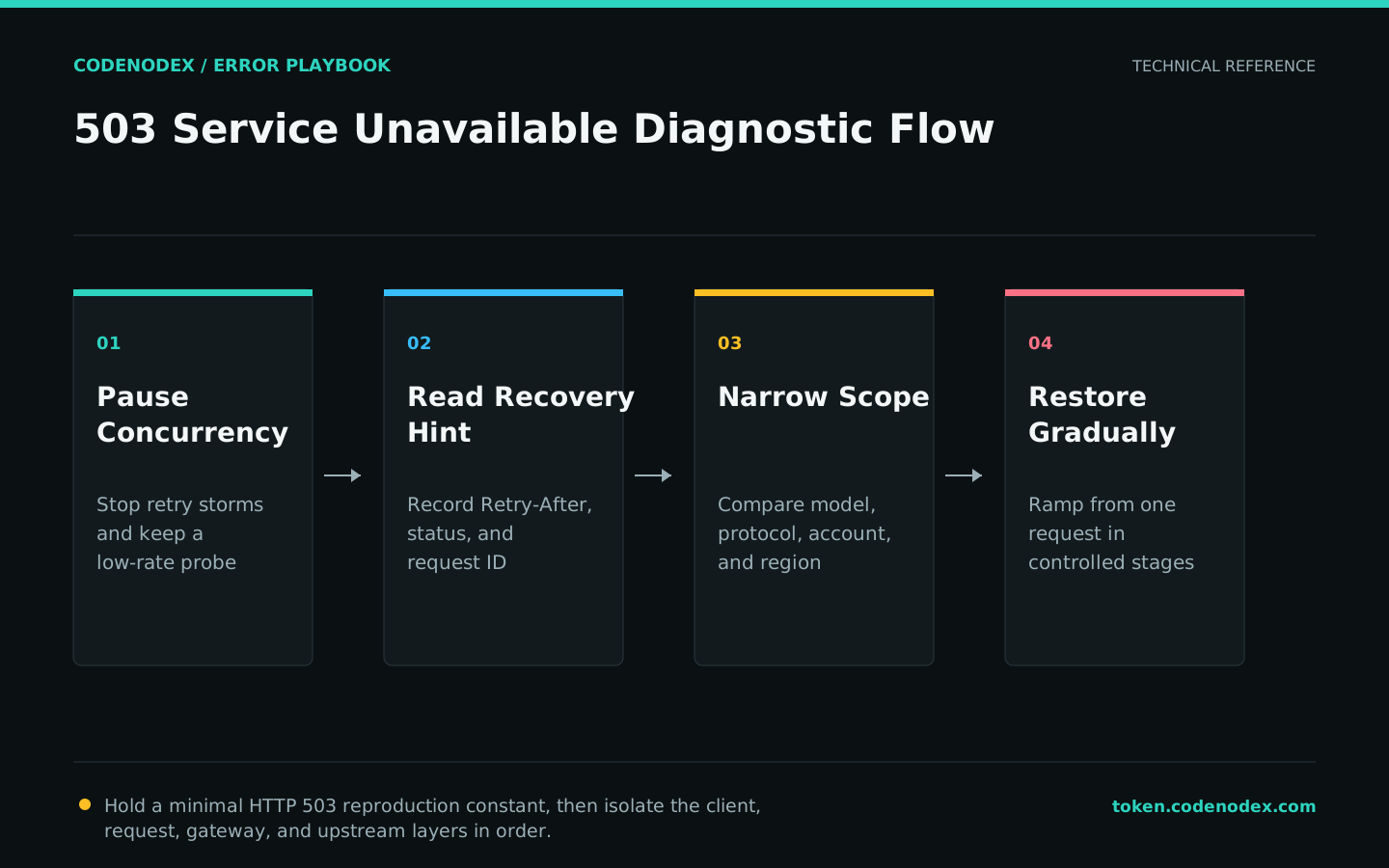
Remediation
- 01Correct the failing layerHonor recovery hints and use a capped queue with jittered backoff.
- 02Restore required behaviorRoute only to a verified healthy alternative with compatible behavior.
- 03Remove temporary workaroundsDrain accumulated work in batches after health and latency remain stable.
Verification
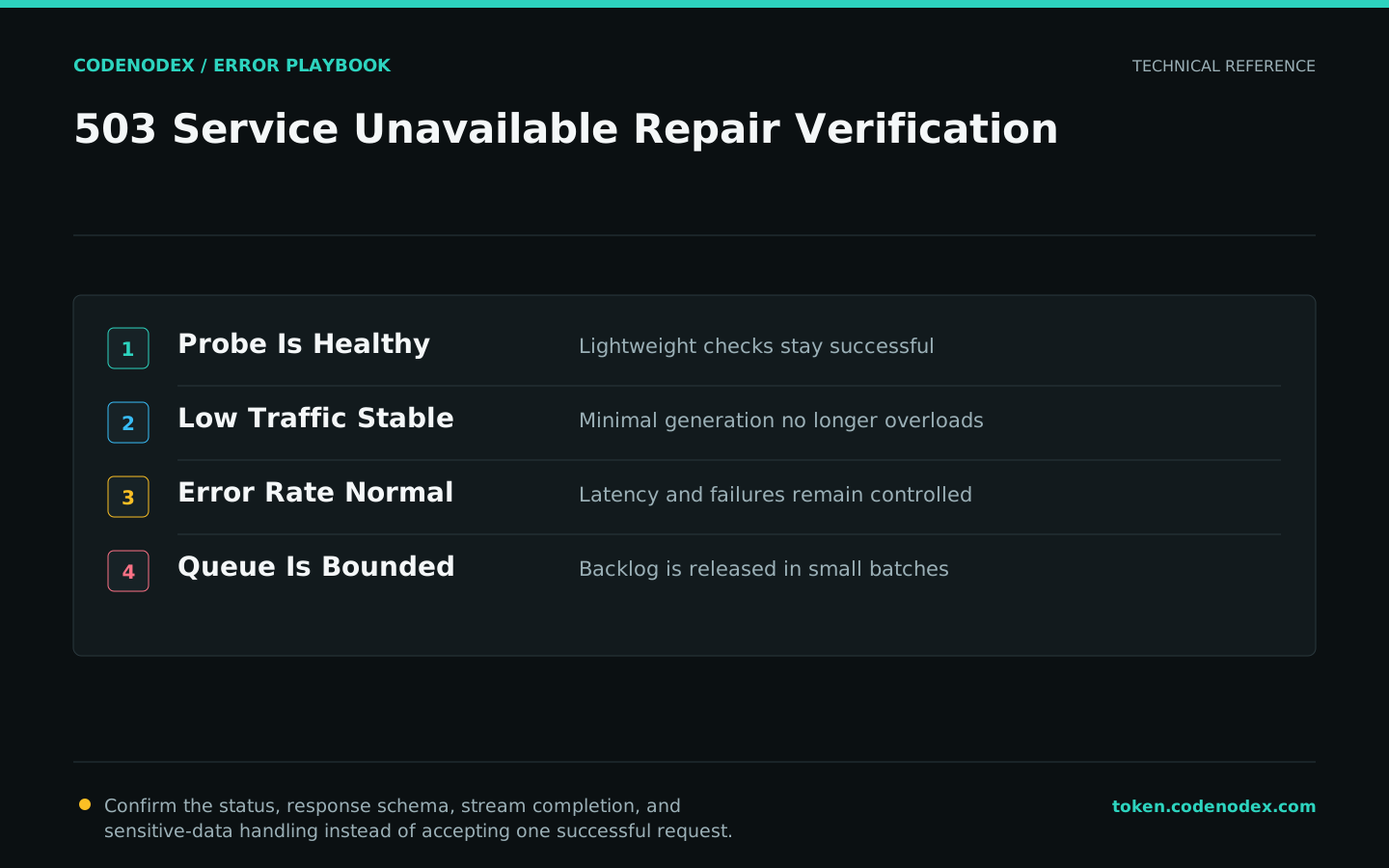
- Lightweight health checks remain successful over time.
- A minimal generation request stays stable at low traffic.
- Latency and error rate remain controlled during each traffic ramp.
- The backlog is released in bounded batches with circuit breaking enabled.
Sensitive diagnostic data
- Do not route sensitive traffic through an unapproved emergency provider.
- Preserve task state so retries do not duplicate external actions.
- Avoid exposing internal incident details in client-facing errors.
- Escalate with impact scope, timestamps, request IDs, recovery headers, and probe results.
Official sources and verification scope
This guide is grounded in protocol specifications and official client documentation. Error text, retry headers, and configuration fields may change by service or client version; verify the sources and redact logs and request samples before sharing.
View documentation scope