Direct answer
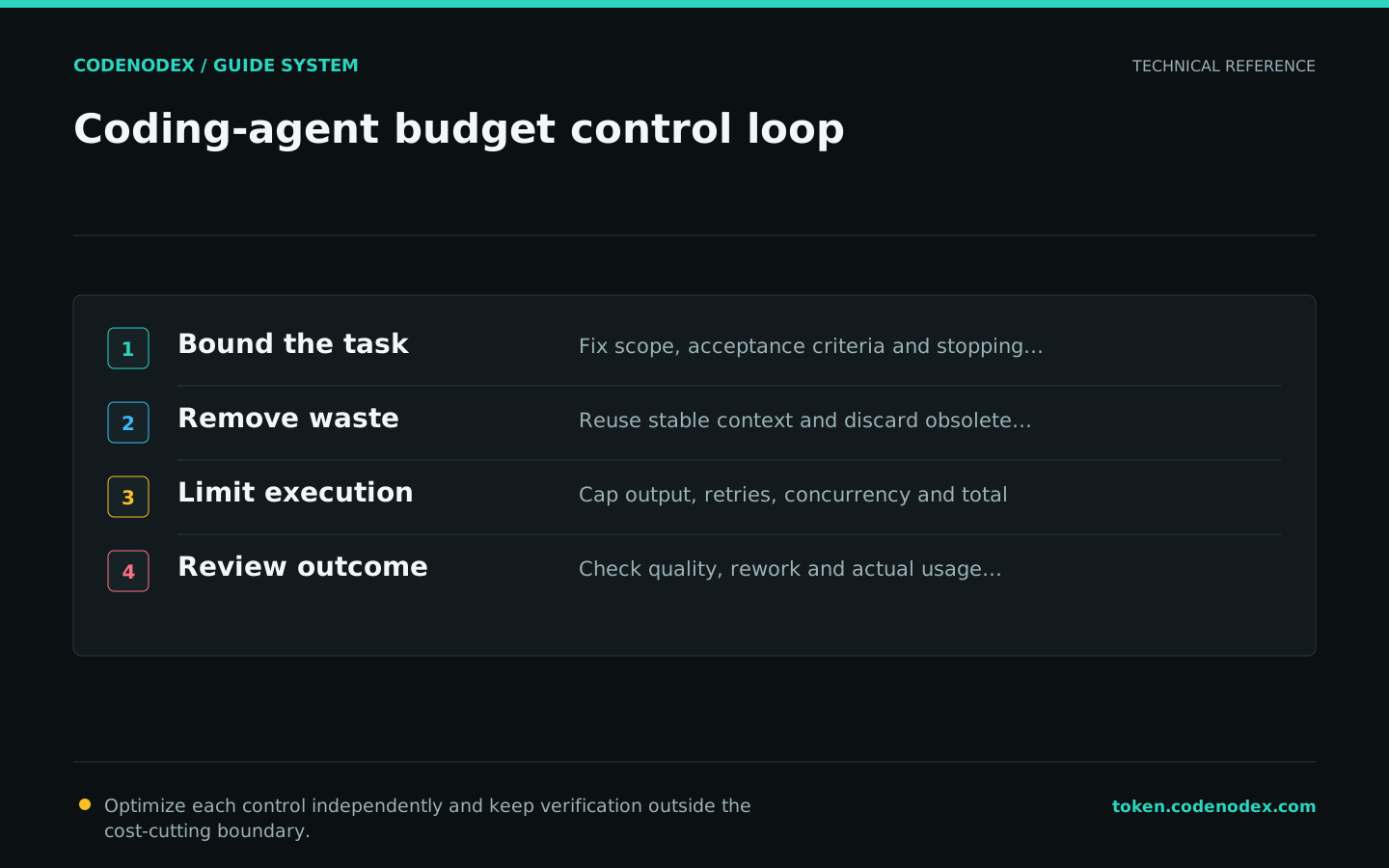
Optimize coding-agent cost by removing waste from the workflow, not by removing verification. Bound the task, reuse stable context where the client supports it, route simple and complex work deliberately, cap retries and output, and measure cost per accepted result alongside failed attempts and human correction.
Key takeaways
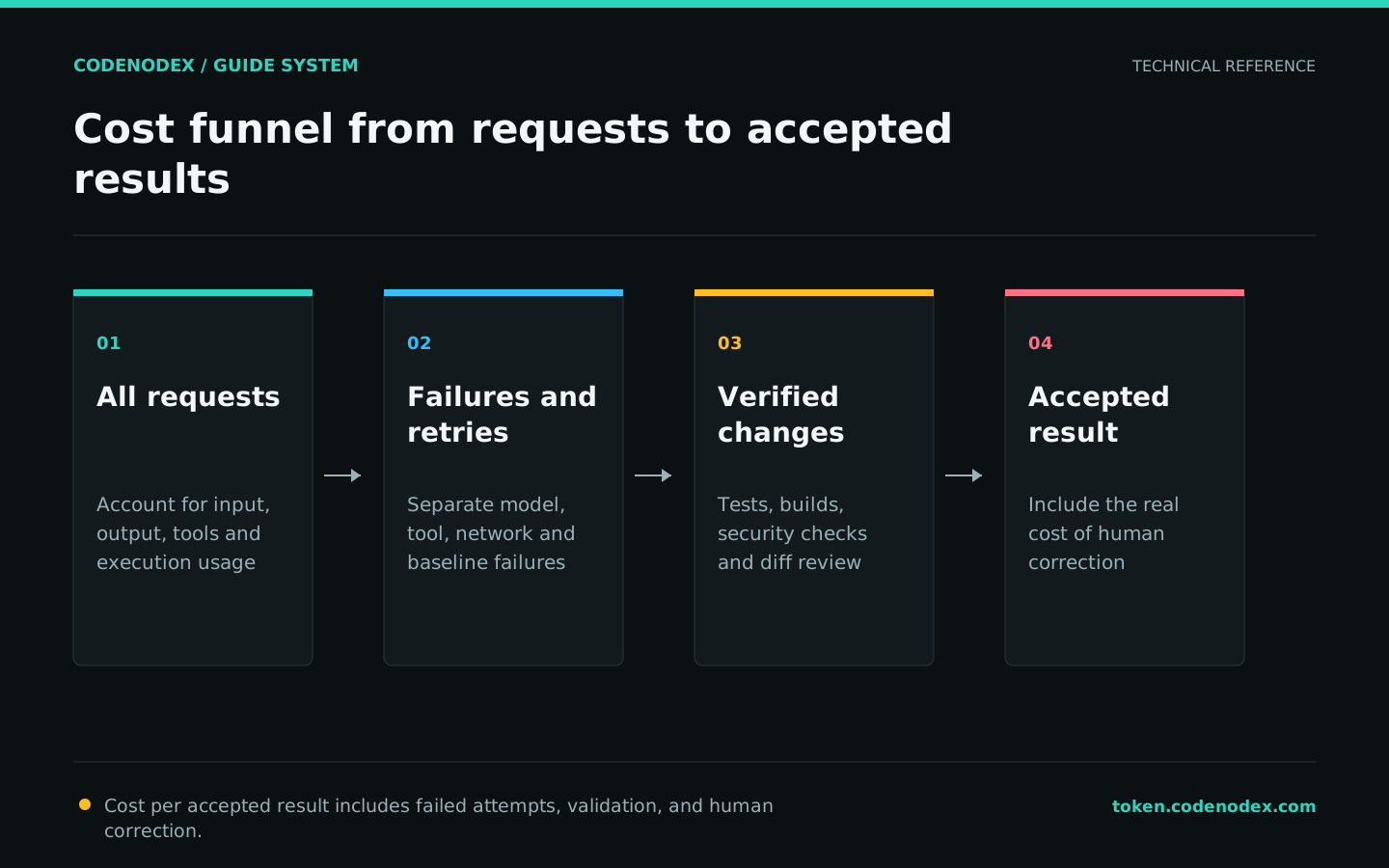
- Measure cost per accepted task, including retries and human correction, rather than cost per request.
- Reduce repeated discovery by keeping repository instructions concise and reusable.
- Use explicit task, retry, output, and concurrency budgets.
- Treat model routing and caching as conditional capabilities that require provider-specific verification.
Key facts
| Fact | Verified value | Evidence |
|---|---|---|
| Cost visibility | Claude Code documents commands and settings for monitoring and controlling usage cost. | View source |
| Caching boundary | Prompt caching behavior and eligibility are documented by the client and provider and should not be assumed. | View source |
| Context pressure | Claude Code documents context-window management as a distinct operational concern. | View source |
| Automation control | Codex non-interactive mode exposes a scriptable boundary where inputs, output, and exit handling can be bounded. | View source |
What this guide helps you solve
Give teams a cost-control framework that preserves reviewability and engineering quality.
Verification scope and limits
- Evidence basis
- Official documentation
- Verification scope
- Recommendations cover documented cost, caching, context, and non-interactive controls; they do not assign prices or savings percentages.
- Limits and invalidation conditions
- - Pricing and cache rules can change.
- - No provider or model is declared cheapest.
- - Savings depend on task mix, acceptance criteria, and retry behavior.
Use accepted work as the cost denominator
A cheap request that produces an unusable patch creates follow-up prompts, human repair, and another validation cycle. Track the complete path from task start to an accepted diff: requests, retries, input and output usage, elapsed time, human interventions, and verification outcome.
Do not compare tools or models on unrelated tasks. Freeze the repository snapshot, scope, prompt, permissions, and acceptance commands before comparing cost profiles.
Remove repeated discovery and oversized context
Keep authoritative build commands, directory boundaries, and test requirements in concise repository instructions. Ask the agent to inspect relevant entry points before reading entire trees. Replace long pasted logs with the minimal failing excerpt plus a path to the complete sanitized artifact.
At each phase, drop superseded output and summarize reviewed decisions. This lowers repeated context transfer while keeping the source of truth available for reinspection.
Set a budget envelope before execution
Define maximum attempts, maximum concurrency, output expectations, network permissions, and a stop condition. Automation should fail closed when the budget is exhausted and return evidence for a human decision instead of silently escalating to broader scope or endless retries.
- One task and one acceptance boundary per run
- Bounded retry count and total time
- Explicit output artifact and size expectation
- Separate approval for scope expansion
- Cancellation that releases tools and external work
Verify routing and caching as separate controls
A gateway may route requests by model, policy, availability, or budget, but the selected route must preserve the required protocol and capabilities. Cache reuse is useful only when the provider confirms eligibility and the stable prompt prefix is actually identical. Record effective model, route, cache indicators when exposed, and the policy version.
Review cost together with quality signals
A useful review groups results by task class and repository, then reports accepted tasks, failed runs, retries, human corrections, and total usage. Investigate sudden changes in context size or retries before changing models. Never log prompts, source code, or credentials merely to improve cost attribution.
Official sources and verification scope
This guide is based on public official documentation. Commands and configuration may change between client versions, so verify the linked sources before use.
View documentation scope