Direct answer
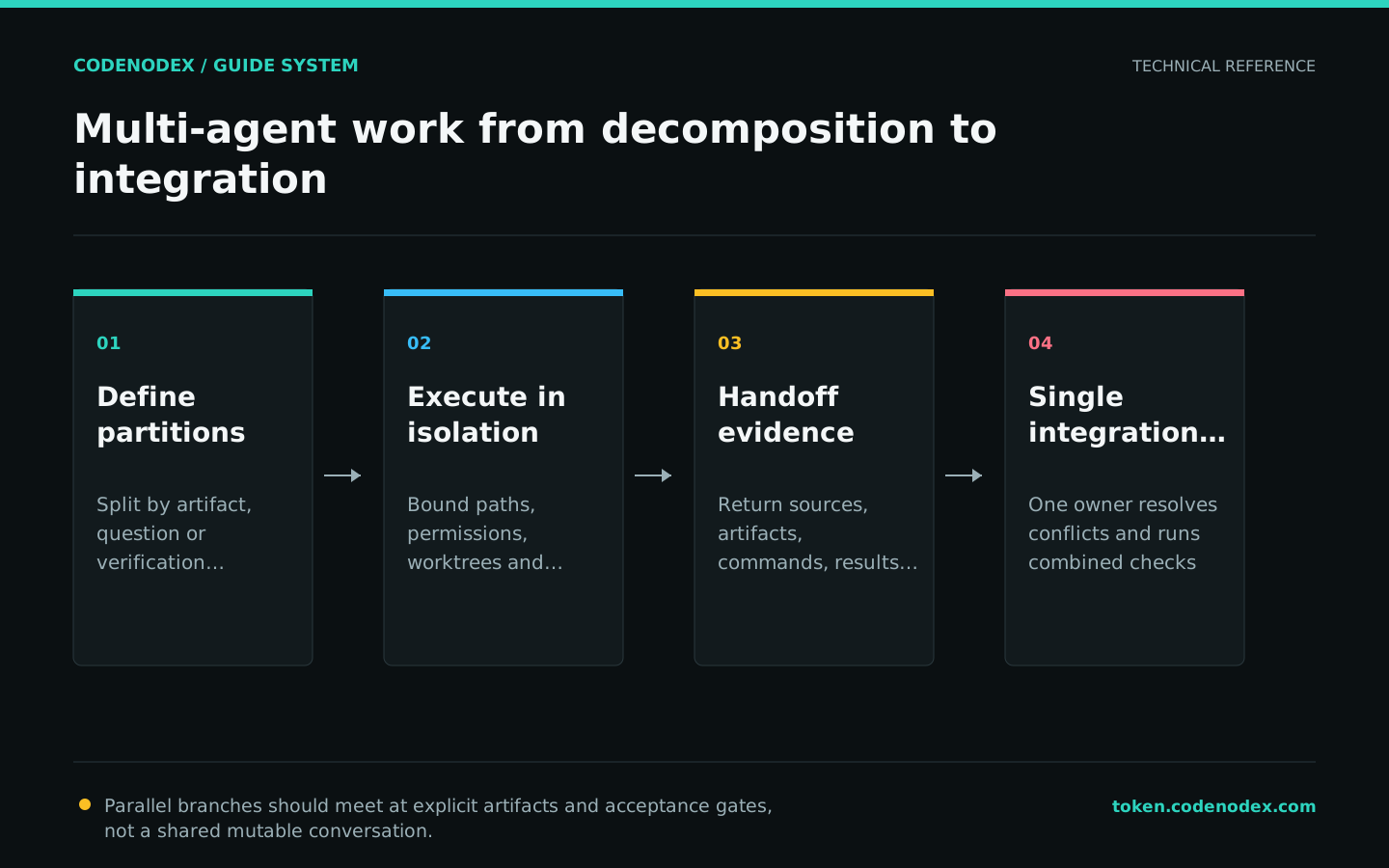
Use multiple coding agents only for work that can be partitioned by artifact, question, or verification responsibility. Give each agent a bounded scope and permissions, isolate writable work, require structured evidence in handoffs, and route every result through one integration owner who resolves conflicts and runs final repository checks.
Key takeaways
- Delegate independent outputs, not vague shared responsibility.
- Use one writer per file or component boundary whenever possible.
- Handoffs must include sources, assumptions, changed artifacts, verification, and unresolved risks.
- One integration owner reviews the combined diff and reruns final checks.
Key facts
| Fact | Verified value | Evidence |
|---|---|---|
| Subagent boundary | Claude Code documents subagents with separate context and configurable tools. | View source |
| Persistent guidance | Codex documents reusable repository instructions and customization surfaces for consistent task execution. | View source |
| External delegation | MCP defines explicit client-server tool and resource boundaries rather than implicit shared state. | View source |
| Risk governance | NIST AI RMF emphasizes named governance and risk-management responsibilities. | View source |
What this guide helps you solve
Help teams parallelize coding-agent work without losing ownership, security, or reproducibility.
Verification scope and limits
- Evidence basis
- Official documentationSpecification
- Verification scope
- The workflow covers decomposition, permission scope, artifact isolation, handoffs, integration, and final verification.
- Limits and invalidation conditions
- - No claim is made that parallel agents are faster for every task.
- - Client orchestration features differ.
- - Repository conflicts and shared external state still require system-specific controls.
Delegate only when outputs can be independently accepted
Good parallel tasks produce distinct artifacts or answers: review separate modules, research separate official sources, implement independent adapters, or run independent verification. A task is poorly decomposed when agents must repeatedly edit the same file or depend on each other’s unreviewed intermediate assumptions.
Write the acceptance condition and dependency for every assignment before spawning work. If the boundary cannot be stated, keep the work sequential until the architecture is understood.
Assign ownership and isolate writable state
Prefer one writer per file or subsystem. Use separate worktrees or branches when agents must write concurrently, and prevent them from sharing deployment credentials, package caches with executable hooks, or mutable external environments unless that sharing is intentional and controlled.
Read-only reviewers can inspect the same snapshot, but their findings must cite paths and revisions so they remain valid when implementation changes.
Use a structured handoff contract
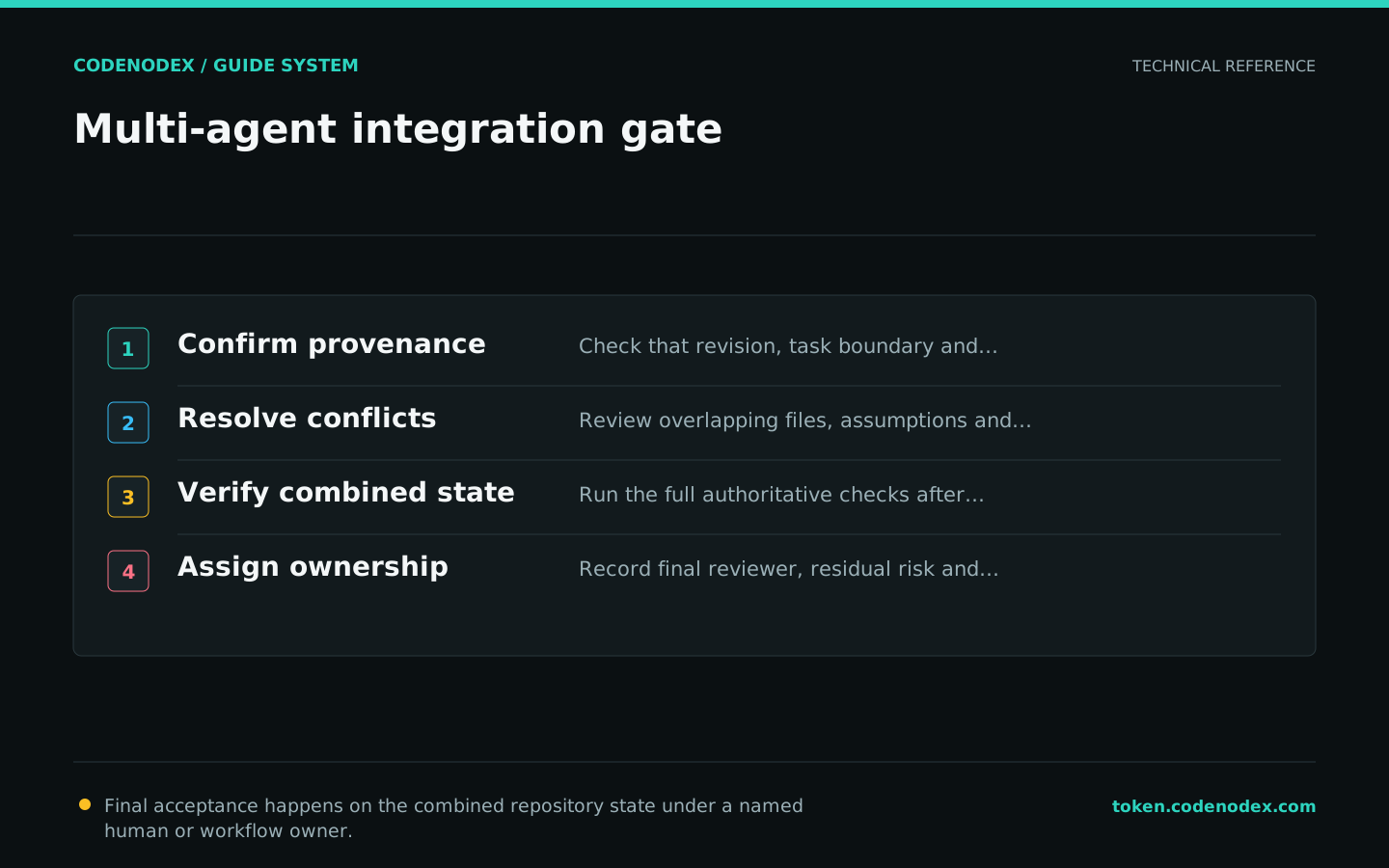
Require each agent to return objective, scope, sources, assumptions, artifacts, commands run, results, unresolved risks, and recommended next action. Do not accept “done” as evidence. The integration owner should be able to reproduce verification without recovering the child agent’s entire transcript.
- Exact starting revision and owned paths
- Source URLs or repository evidence
- Files changed or artifacts produced
- Verification commands and observed results
- Conflicts, limitations, and open decisions
Integrate through one accountable gate
The integration owner checks that outputs match the assignment, resolves overlapping edits, reviews security-sensitive changes, and runs tests on the combined state. Per-agent passing tests do not prove that the merged result is correct.
Stop amplification when one branch fails
Cancel dependent work when a prerequisite is invalid, a security boundary is crossed, or the baseline changes. Bound fan-out, retries, and total execution. Preserve useful findings from canceled branches, but mark them stale until revalidated against the final revision.
Official sources and verification scope
This guide is based on public official documentation. Commands and configuration may change between client versions, so verify the linked sources before use.
View documentation scope