Direct answer
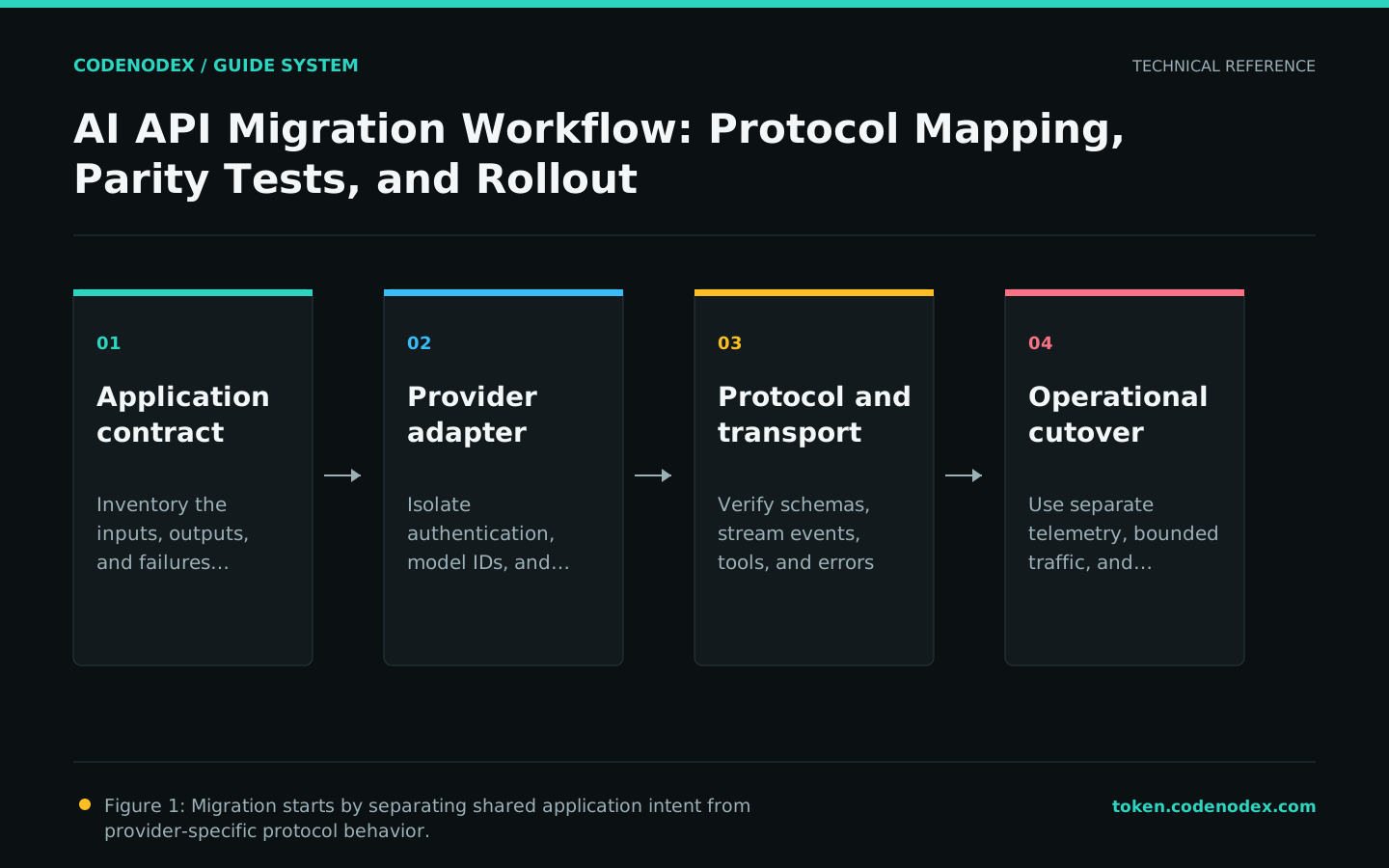
Inventory the current request, response, streaming, tool, error, timeout, and usage contracts before editing. Build the new provider behind an adapter, replay sanitized fixtures, compare semantically relevant outputs and failure behavior, then move traffic gradually with separate credentials, telemetry, and a tested rollback.
Key takeaways
- Protocol compatibility must be verified field by field and event by event.
- Keep provider-specific authentication and model identifiers outside shared business logic.
- Parity tests should cover streaming completion, tool calls, errors, cancellation, and usage data.
- Roll out with bounded traffic and an explicit fallback; do not silently mix provider behavior.
Key facts
| Fact | Verified value | Evidence |
|---|---|---|
| OpenAI contract | The OpenAI API reference documents endpoint-specific request and response fields. | View source |
| Anthropic contract | The Anthropic Messages API documents its message schema, authentication, and response structure. | View source |
| HTTP description | OpenAPI defines a machine-readable description format for HTTP APIs and their operations. | View source |
| Streaming transport | The HTML standard defines the event stream framing used by server-sent events. | View source |
What this guide helps you solve
Plan and verify an AI API migration without assuming that similarly named endpoints or models are fully compatible.
Verification scope and limits
- Evidence basis
- Official documentationSpecificationLocal verification
- Verification scope
- Covers contract inventory, adapter design, fixture replay, streaming and error parity, staged rollout, and rollback.
- Limits and invalidation conditions
- - Provider model behavior is not deterministic, so semantic acceptance requires reviewed tolerances and task-specific evaluation.
- - Pricing, limits, model availability, and undocumented extensions can change independently of protocol shape.
Inventory the integration contract before changing endpoints
Trace every call site and record base URL composition, authentication, model IDs, request fields, response parsing, streaming events, tool schemas, timeout and retry behavior, error handling, usage accounting, and observability. Include SDK version and environment overrides.
Mark which behavior comes from an official protocol, an SDK convenience, a provider extension, or application code. Similar JSON shapes do not prove equivalent semantics.
Create an explicit protocol difference map
Compare roles and message content, system instructions, model selection, sampling controls, tool declarations and results, stop reasons, usage fields, streaming event order, status codes, retry hints, and cancellation. Record unsupported or conditional features rather than dropping them silently.
- Keep model aliases and provider-native identifiers distinct.
- Validate URL path composition; do not append a version segment twice.
- Map errors by meaning, not only HTTP status.
- Document what the fallback does when a feature has no equivalent.
Introduce a provider adapter and separate credentials
Keep shared business input in an internal contract and translate at the provider edge. Provider-specific headers, environment variables, model IDs, and parsing remain inside the adapter. Use separate keys and quotas so migration traffic can be disabled without affecting the old path.
Ask the coding agent for small adapter changes and reviewed mappings. Do not let it spread provider conditionals across every call site.
Build a sanitized parity and failure suite
Create fixtures for simple text, long context, tool requests, streaming completion, cancellation, invalid authentication, invalid model, rate limiting, timeout, and malformed responses. Compare schema and application-relevant outcomes; do not require identical natural-language text.
Stage traffic with observable rollback gates
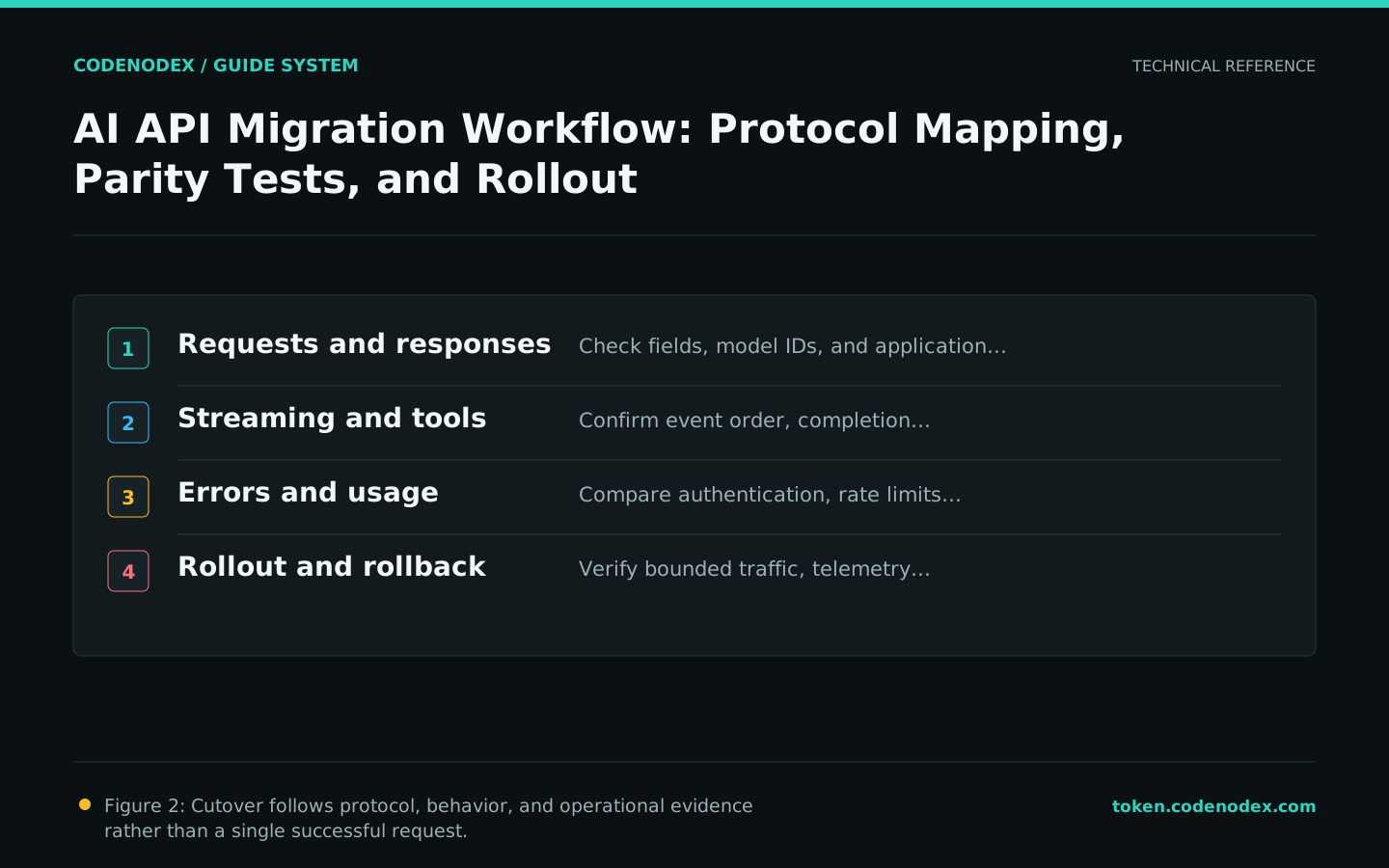
Verify the adapter locally and in staging, then move a bounded workload or explicitly opted-in caller. Monitor provider-specific errors, latency, cancellation, token or usage accounting, tool completion, and fallbacks. Keep old credentials and routing available until rollback has been exercised.
- 01Static gateValidate configuration, schemas, and adapter tests.
- 02Behavior gateReplay the reviewed parity and error suite.
- 03Traffic gateMove a bounded cohort with separate telemetry.
- 04Cutover gateConfirm operational ownership, rollback, and billing reconciliation.
Retire the old path only after reconciliation
Confirm that all callers, background jobs, dashboards, alerts, runbooks, and cost attribution use the new path. Revoke old keys through the normal secret process and remove fallback code in a separate reviewed change. Preserve the migration map for future SDK or provider upgrades.
Official sources and verification scope
This guide is based on public official documentation. Commands and configuration may change between client versions, so verify the linked sources before use.
View documentation scope