Direct answer
Use a coding agent as a first-pass reviewer, not an automatic approver. Give it a fixed commit range, repository instructions, risk priorities, and read-only verification commands; require every finding to name the affected code, explain the failure mode, and include reproducible evidence before a human accepts it.
Key takeaways
- Freeze the base and head commits so the review target cannot drift during analysis.
- Prioritize correctness, security, data loss, and missing tests before style preferences.
- Reject findings that cannot identify a concrete behavior, code location, and verification path.
- Keep merge approval and high-risk remediation with accountable maintainers.
Key facts
| Fact | Verified value | Evidence |
|---|---|---|
| Review object | GitHub pull request reviews attach discussion and approval state to a specific change set. | View source |
| Agent capability | Codex CLI can inspect repositories, review changes, and run commands inside configured approval and sandbox boundaries. | View source |
| Repository context | Claude Code workflows begin with repository exploration and can use project instructions and tests as working context. | View source |
| Permission baseline | Tool permissions can be limited so a review session does not receive unrelated write or command authority. | View source |
What this guide helps you solve
Design a repeatable AI-assisted code review that produces actionable findings without granting unnecessary write access.
Verification scope and limits
- Evidence basis
- Official documentationLocal verification
- Verification scope
- Covers review scoping, evidence requirements, read-only checks, finding triage, and maintainer approval for repository changes.
- Limits and invalidation conditions
- - No coding agent can prove the absence of defects or replace domain-specific security and compliance review.
- - Available commands and permission controls depend on the installed client version and repository environment.
Freeze the review target and acceptance boundary
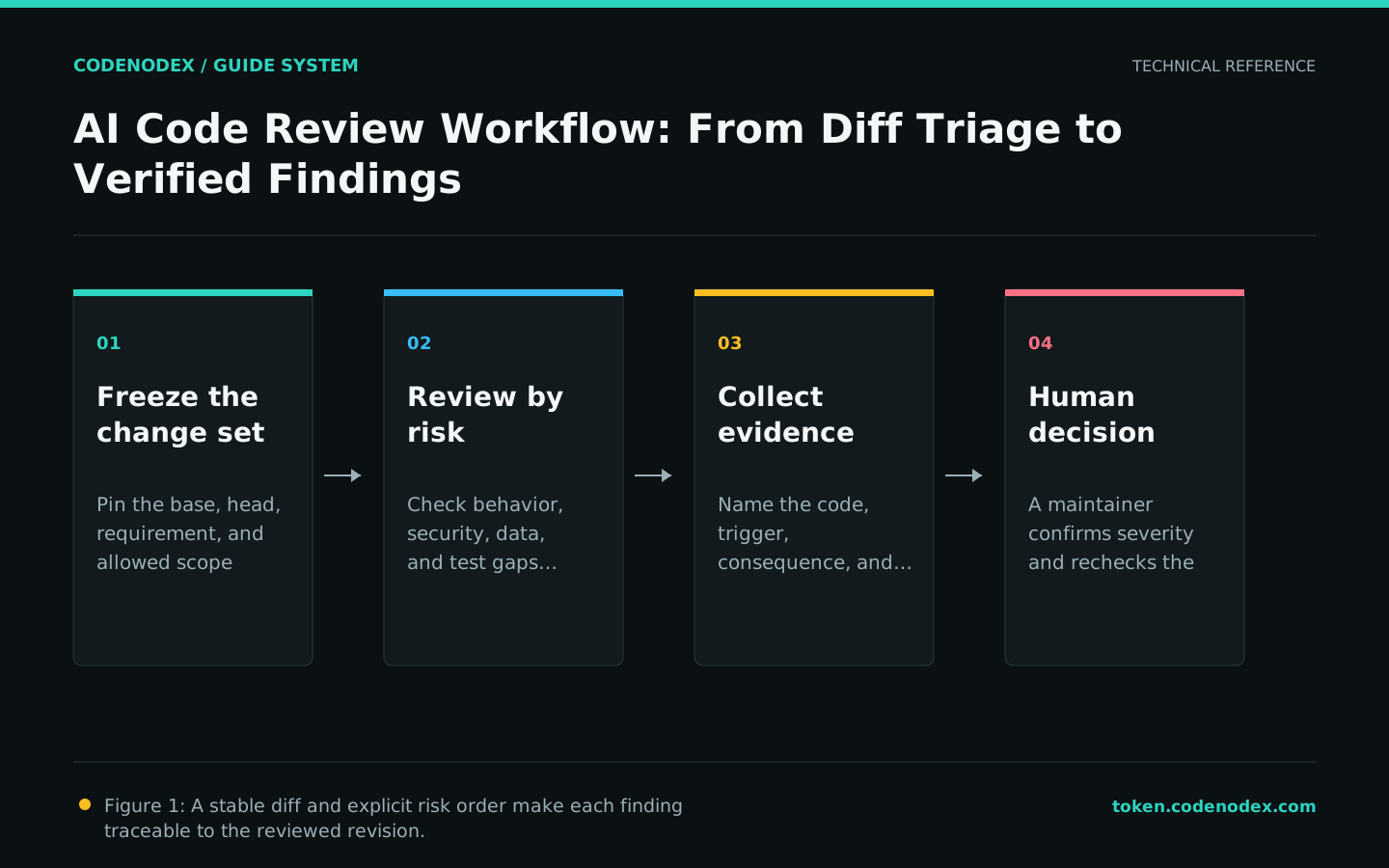
Start from a named base commit and head commit, not an unspecified working tree. Provide the requirement, affected service, repository instructions, and checks that maintainers normally run. Exclude generated files and unrelated refactors explicitly when they would add noise.
The agent should first summarize changed files and likely risk surfaces. If the diff changes while review is running, restart from the new commit range rather than mixing observations from two versions.
Run risk passes before style commentary
Ask separate questions about behavior regressions, authorization, data mutation, concurrency, error handling, compatibility, and missing tests. A single broad prompt tends to produce a mixture of important issues and low-value preferences.
- Trace changed inputs to side effects and externally visible outputs.
- Check failure paths, retries, cleanup, and partial writes.
- Compare tests with the changed branches and boundary conditions.
- Treat formatting and naming as secondary unless they hide a defect.
Require a finding contract
Every reported issue should state the affected file or symbol, the triggering condition, the observable consequence, severity reasoning, and a way to verify it. A concern such as “this may fail” is not actionable until the agent can show which input or state reaches the failing branch.
Ask the agent to separate confirmed defects from questions and residual risks. This lets maintainers investigate uncertainty without treating speculation as a blocker.
Verify important findings in a constrained environment
Run the narrowest existing test, type check, linter, or static query that can confirm a finding. Keep the review agent read-only unless a maintainer explicitly starts a separate remediation task. Do not provide production credentials or unrestricted network access merely to reproduce a local code path.
When a full test suite is too expensive, record the exact subset that ran and what remains unverified. An honest scope statement is more useful than a green result with hidden gaps.
Triage findings through maintainer gates
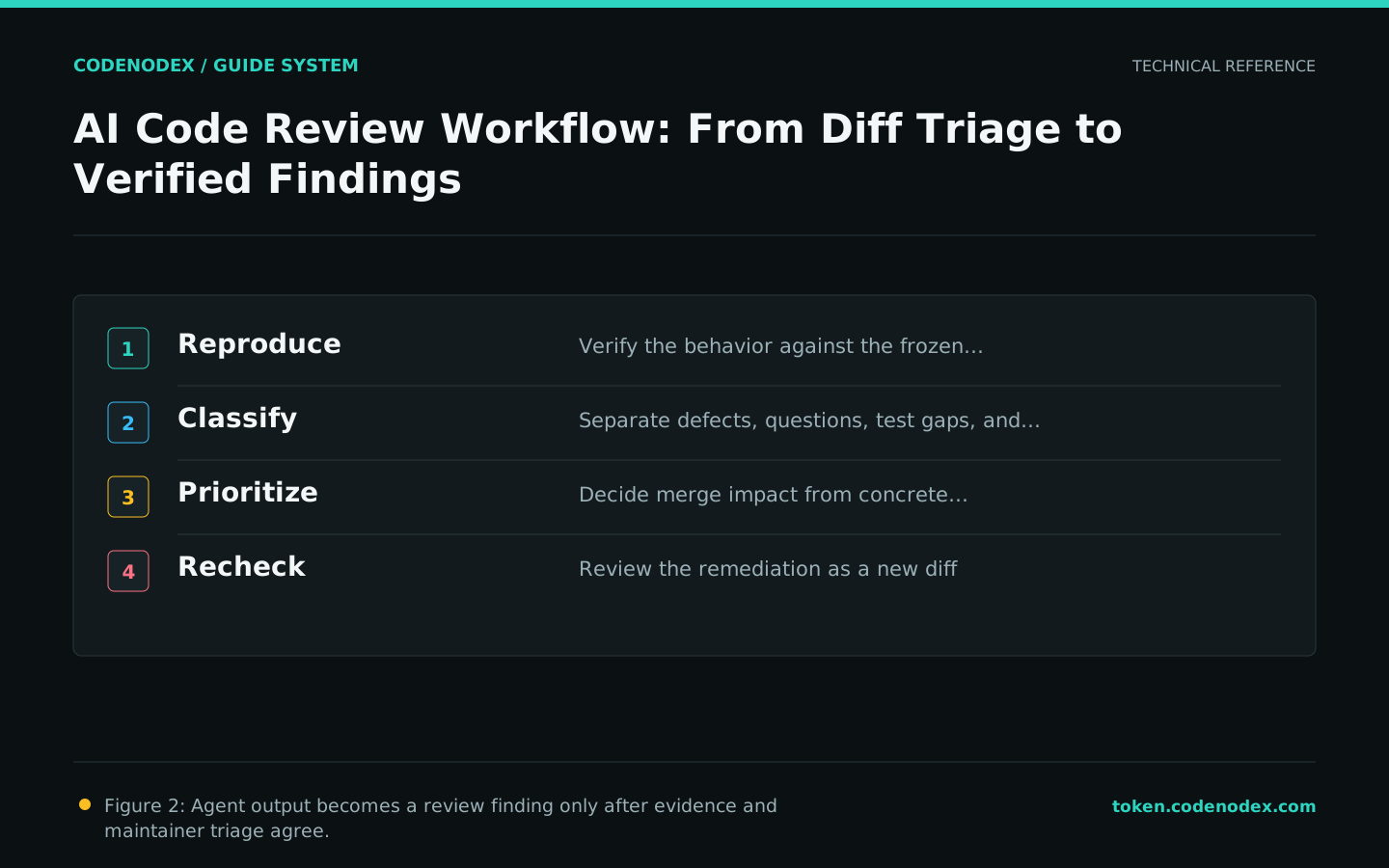
A maintainer should confirm that the finding applies to intended behavior, assign severity, decide whether it blocks merge, and choose the remediation owner. Duplicate or invalid findings remain useful feedback for improving future review prompts.
- 01ConfirmReproduce the behavior against the frozen revision.
- 02ClassifySeparate defect, design question, test gap, and preference.
- 03DecideAssign severity and merge impact through the normal review policy.
- 04RecheckReview the fix as a new diff and rerun the relevant check.
Improve the workflow from reviewed outcomes
Keep a small set of sanitized examples of accepted, rejected, and missed findings. Use them to refine risk prompts and repository instructions, not to claim a universal detection rate. Revisit the workflow when build commands, ownership boundaries, or client permissions change.
Official sources and verification scope
This guide is based on public official documentation. Commands and configuration may change between client versions, so verify the linked sources before use.
View documentation scope