Direct answer
Use standard `langchain-openai` parameters with CodeNodex and combine dependency setup, secret management, a minimal call, and bounded retries in one verification path.
What this guide helps you solve
Explain how to set a custom Base URL, API key, and model for LangChain `ChatOpenAI` without misrepresenting an SDK integration as automatic CodeNodex CLI configuration.
Create an isolated environment and install langchain-openai
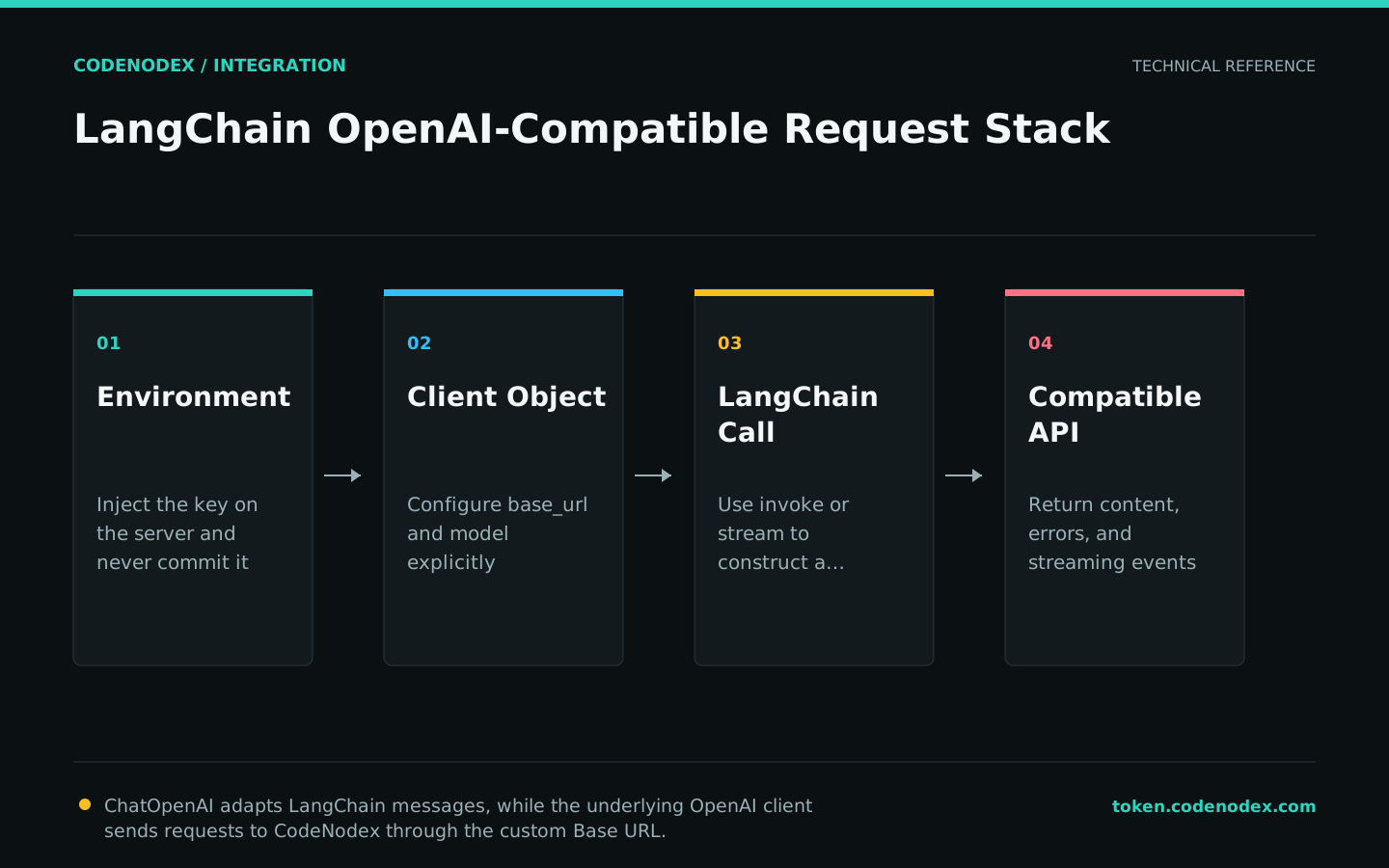
LangChain's OpenAI integration is distributed in the separate langchain-openai package. The CodeNodex CLI does not modify Python project dependencies and has no langchain client ID.
Use a virtual environment to isolate the project and record dependency versions in the project's own lockfile. The command installs only the official integration package and does not require changing CodeNodex site dependencies.
python -m venv .venv
source .venv/bin/activate
python -m pip install --upgrade langchain-openaiPass the key, Base URL, and model explicitly
Keep the API key in the process environment rather than source code. Set base_url to https://token.codenodex.com/v1 and use a model ID that is actually visible to the current key.
Production calls need explicit timeouts and bounded retries. Unbounded retries amplify upstream failures and cause application requests to accumulate.
import os
from langchain_openai import ChatOpenAI

llm = ChatOpenAI(
    model="YOUR_MODEL_ID",
    api_key=os.environ["CODENODEX_API_KEY"],
    base_url="https://token.codenodex.com/v1",
    timeout=60,
    max_retries=2,
)
Run a minimal call and inspect the response
Start with a string input to invoke, then print the text and response metadata. Do not begin by adding an agent, memory, retriever, or output parser.
After the minimal call works, add PromptTemplate and chain components one layer at a time, retaining an independently runnable regression example for each layer.
response = llm.invoke("Explain the value of reproducible builds in one sentence.")
print(response.content)
print(response.response_metadata)Add production timeouts, retries, and observability
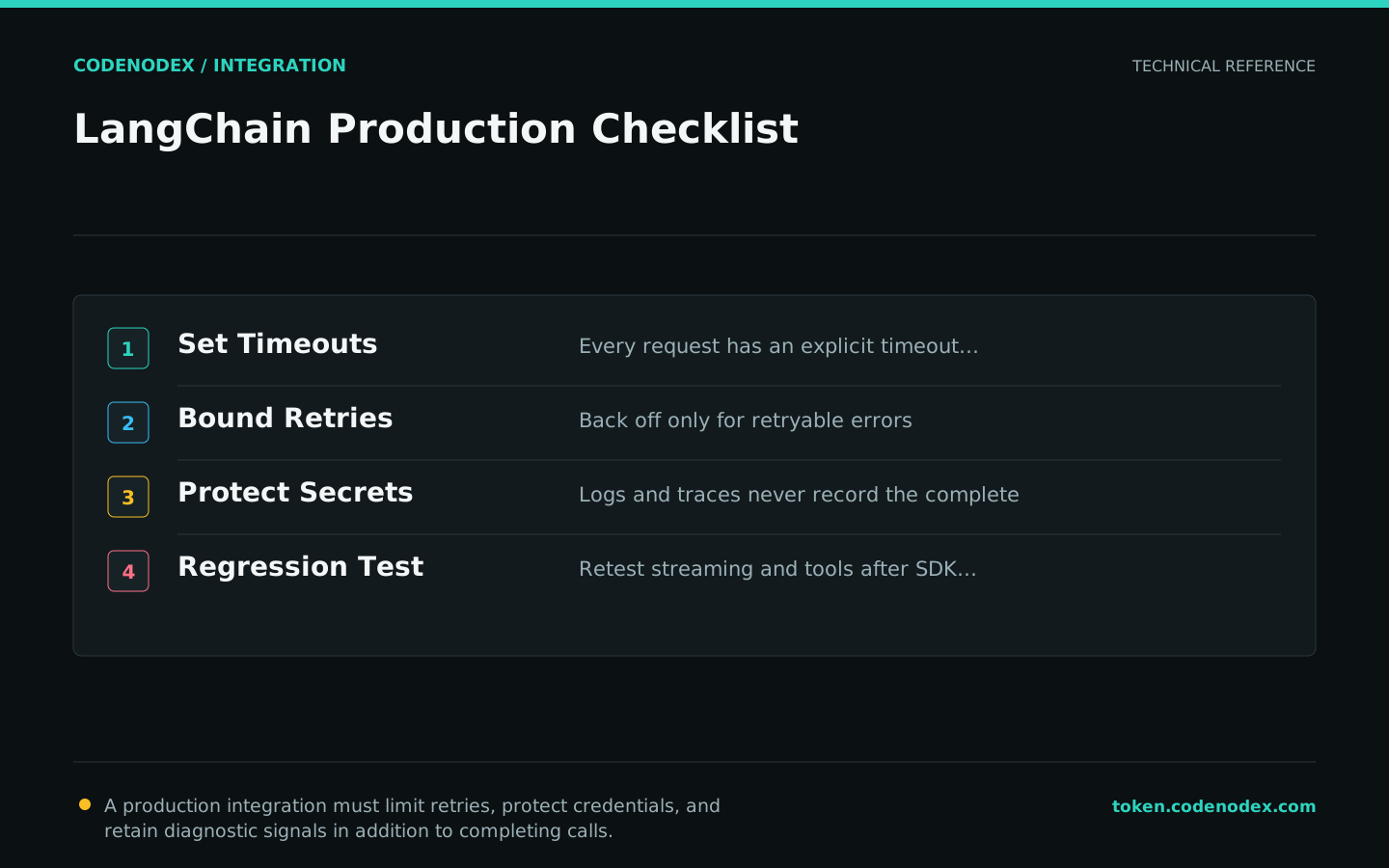
Record request duration, model ID, HTTP status, and an application request ID, but never log the complete API key or sensitive user input. Use bounded exponential backoff with jitter for 429 and temporary 5xx responses.
LangChain callbacks or tracing can send prompts to additional services. Review the data boundary before enabling them; neither is required to verify the CodeNodex integration.
- At process startup, check only whether the environment variable exists; never print its value.
- Set an explicit request timeout and cap the total retry duration.
- Distinguish authentication, rate-limit, model, and network failures by status.
- Create alerts from redacted model and latency metrics.
Distinguish SDK, model, and chain-component errors
For 401, check the key in the environment. For 404, check base_url and the model ID. For 429, check balance and concurrency. For connection failures, check proxy, DNS, and certificates.
If the OpenAI Python SDK works directly but ChatOpenAI fails, build a minimal reproduction and check the langchain-openai version and parameters. If only a complex chain fails, continue with the prompt template, output parser, or tool definition.
Official sources and verification scope
This guide is based on public official documentation. Commands and configuration may change between client versions, so verify the linked sources before use.
View documentation scope